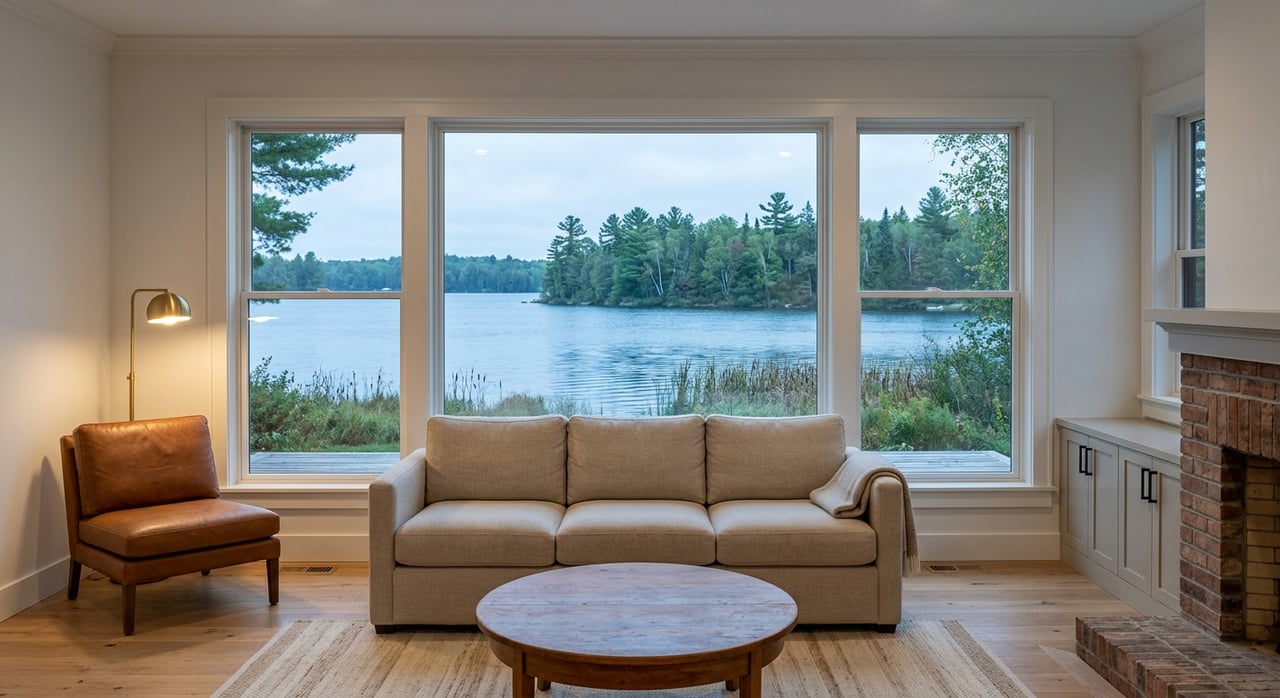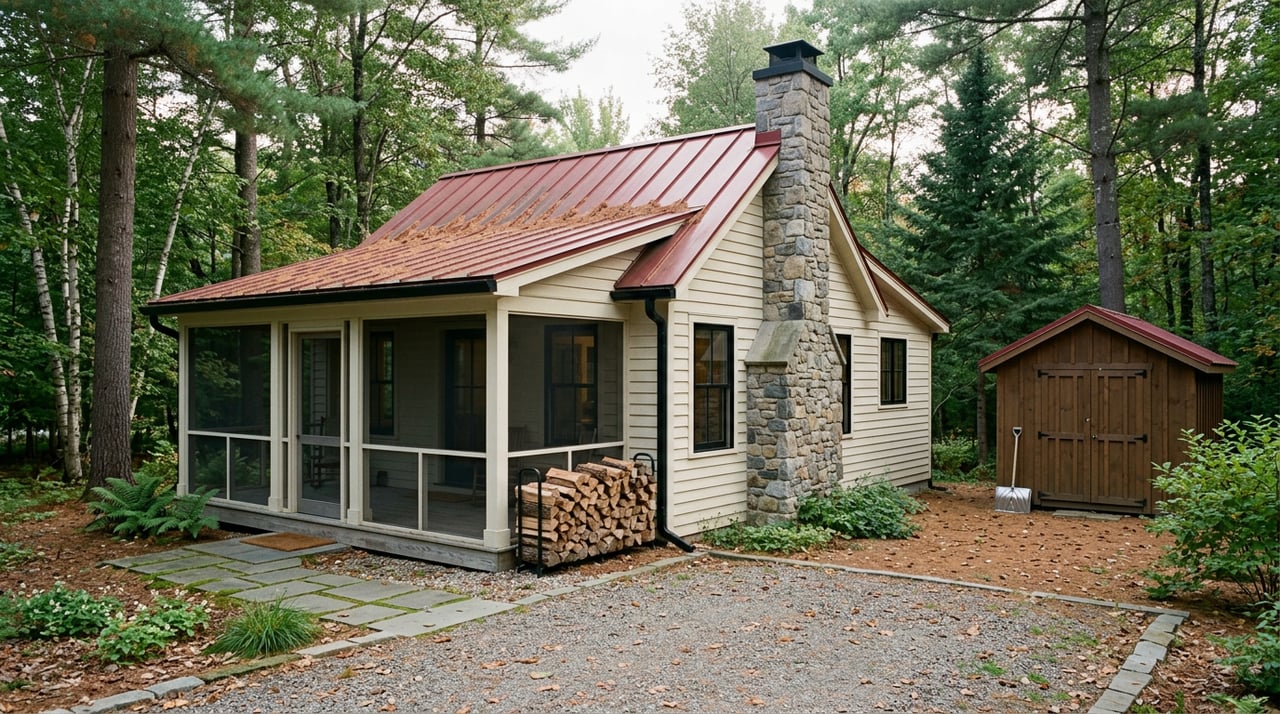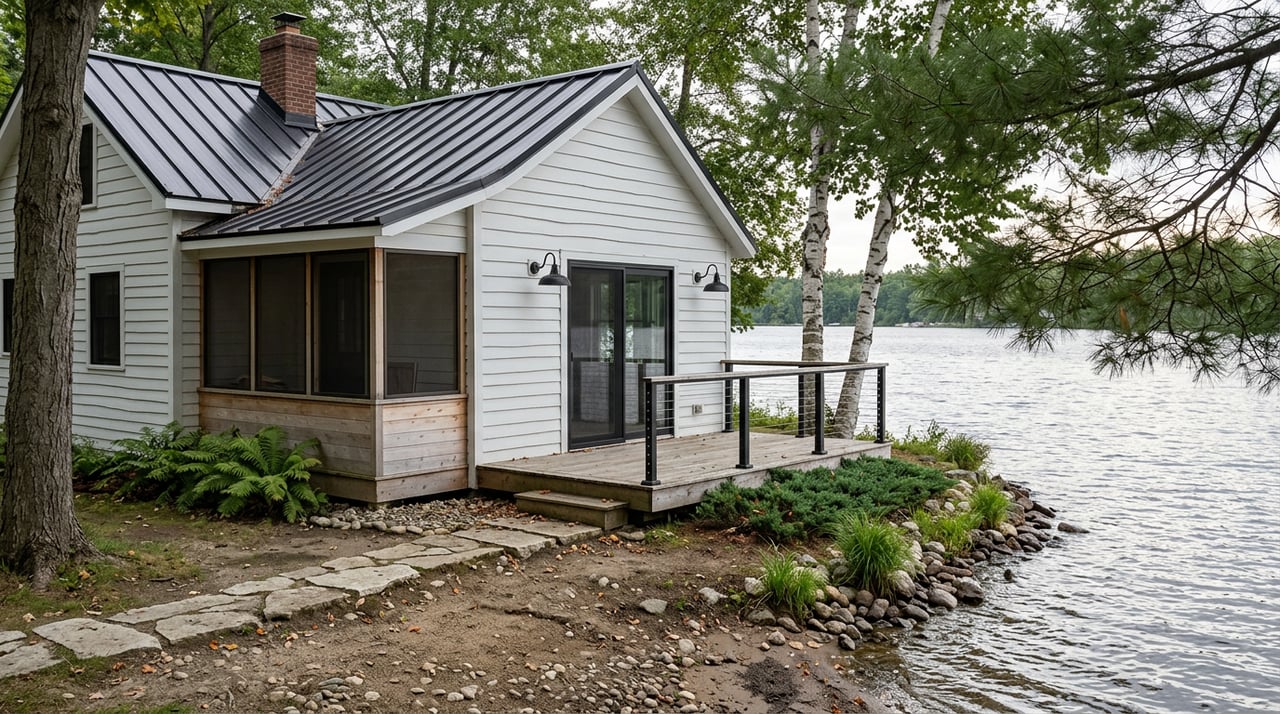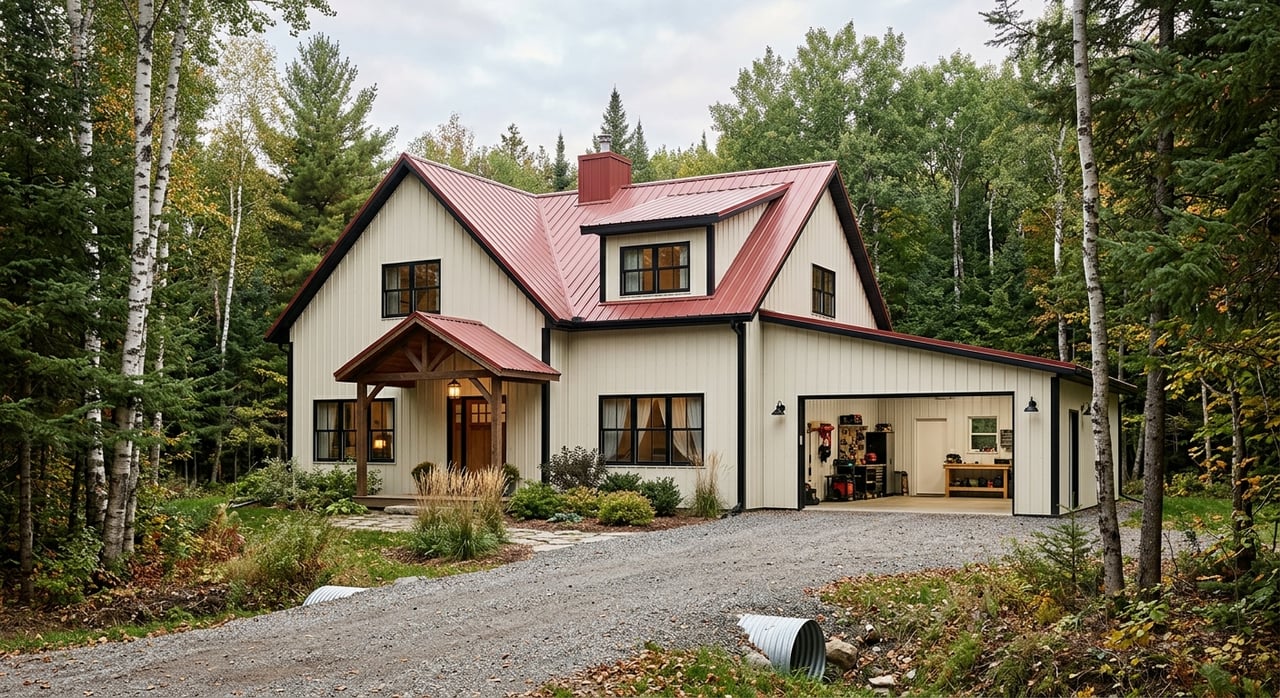
Thinking about building a cabin or barndominium near Exeland? It can be a great way to create your Northwoods retreat, but raw land projects often come with more moving parts than buyers expect. If you want to avoid expensive surprises, you need to understand zoning, access, utilities, and site costs before you fall in love with a parcel. Here’s what to know before you build near Exeland.
Why Exeland Appeals to Buyers
Exeland offers a small-service hub feel with some practical everyday support. The village lists water and sewer service, electricity, and trash and recycling access, along with local businesses such as gas, groceries, hardware, lodging, restaurants, and some contractor services.
That convenience matters if you want a property with easier access to basics. At the same time, many parcels outside the village core still function more like rural country properties than plug-and-play subdivision lots, so you should verify each lot’s actual utility and access situation.
How Sawyer County Views Your Build
Cabin or barndominium usually means dwelling
In Sawyer County, a building used as living quarters is generally treated as a dwelling. The county also states that guesthouses with kitchen and bathroom facilities, along with accessory structures that include habitable living area, are dwelling units under the Sawyer County zoning ordinance.
That means a barndominium with sleeping or living space is not simply treated like a barn. If it is meant for living, it is typically regulated as a dwelling, and the county allows only one dwelling unit per lot.
Zoning still controls what is allowed
Even if your plan seems straightforward, the parcel’s zoning district still matters. Sawyer County’s residential and residential/recreational districts allow one-family and two-family dwellings, but the exact parcel zoning determines what can actually be built and whether any added approvals may be needed.
This is one of the first checks you should make before writing an offer. A great-looking parcel does not always mean a simple path to construction.
Lot Size and Shoreland Rules Matter
Minimum dimensions can change by sewer access
For R-1, RR-1, and RR-2 districts, Sawyer County lists a minimum lot area of 10,000 square feet with public sewer and 20,000 square feet without public sewer. Minimum lot width is 75 feet with public sewer and 100 feet without public sewer, based on the county’s dimensional standards.
If you are looking at a rural parcel near Exeland, the lot may need to meet the larger dimensions because public sewer often is not available. That can affect whether a parcel is truly buildable for your intended use.
Waterfront and wet areas bring extra limits
Shoreline lots have additional rules. Sawyer County requires a 100-foot minimum lot width and 100 feet of frontage at the ordinary high-water mark, and its shoreland overlay applies within 1,000 feet of lakes, ponds, or flowages and within 300 feet of rivers or streams.
The same ordinance includes 75-foot setbacks from navigable waters and adjacent wetlands. For buyers dreaming of a wooded retreat near water, these setbacks can reduce the actual area where you can place a cabin, barndominium, driveway, well, and septic system.
Don’t Count on Tiny-Structure Shortcuts
Camping-style options are limited
Some buyers assume they can place a tiny cabin, park model, or similar structure on vacant land as a temporary workaround. In Sawyer County, that is not usually how it works.
The county defines a seasonal dwelling as uninsulated and unsewered, and it limits camping cabins and park model trailers to licensed campgrounds only under the county ordinance. So if you are buying vacant land near Exeland, a camping-style structure is not a universal shortcut.
A shed or barn first is not always simple
Starting with just a barn or storage building can also be more complicated than buyers expect. Sawyer County may allow a single accessory structure on vacant land only by conditional use, and it can require a principal dwelling permit within three years or require removal if the dwelling is never built.
In other words, the “I’ll put up the shop now and build later” plan needs a careful review before you assume it will work. This is exactly where early due diligence can save you time and money.
Permits Start Earlier Than You Think
Land Use Permit comes before construction
Sawyer County requires a Land Use Permit for any new or replacement structure being built, assembled, or placed on land for long-term or temporary use. The application needs a plot map showing structure location and setbacks, and dwellings also need a general layout.
That requirement can apply even if a structure is on skids or intended to be temporary. For most buyers, that means permits begin before the first shovel hits the ground.
Fire number and driveway approvals matter too
If you are building a principal structure, Sawyer County requires a fire number or property address, and the county says the fire-number application must be filed before the Land Use Permit for new construction. The process can take up to about eight weeks.
Access approval may also be needed depending on the road. Numbered highways go through WisDOT, lettered roads go through the county highway department, and word-named roads are handled by the township.
Access and Setbacks Can Shrink Buildable Space
Easements are not just lines on paper
On rural land, legal access is a major part of buildability. Sawyer County has specific setback rules tied to private driveway easements and private road easements, and those rules can affect where you are allowed to place your structure.
For example, private driveway easements 33 feet wide or less require a 30-foot setback from the centerline. Other easement widths have different standards in the county zoning ordinance, which is why easement details matter so much during lot evaluation.
A survey is often money well spent
A recent survey can help confirm boundaries, easements, and how much of the parcel is actually buildable after setbacks are applied. According to HomeGuide’s survey cost overview, a land survey often runs about $200 to $1,200 on average.
Compared with fixing a boundary dispute or discovering an access problem after closing, that is usually a small cost. On raw land near Exeland, a survey can be one of the smartest due-diligence tools you use.
Utilities and Sanitation Are Core Budget Items
Village lots and rural lots are very different
Parcels in or near the village may have more utility options because Exeland lists village water and sewer utilities. But outside the village core, you are often planning for private systems instead.
That means you should never assume service availability based on proximity alone. Each parcel needs its own verification.
Septic planning starts early
Sawyer County states that any structure intended for human habitation or occupancy, if not served by public sewer and if running water is plumbed into the structure, must have a sewage treatment or dispersal system. The county also requires a site and soil evaluation by a Wisconsin Certified Soil Tester for most systems, and only licensed plumbers can design and apply for sanitary permits.
This is why septic feasibility should be one of your earliest checks. If the soil or layout creates problems, the parcel may become far more expensive to develop than expected.
Wells need proper siting too
Wisconsin requires licensed well drillers and pump installers, and state rules generally call for a 100-by-100-foot reserved parcel with the well at least 50 feet from a property boundary, according to the Wisconsin DNR well licensing information.
That can be a big factor on smaller or oddly shaped lots. Your cabin footprint is only one part of the layout. You also need room for the well, septic system, driveway, and setback compliance.
What It May Cost to Build Near Exeland
Cabin and barndominium construction ranges
For broad planning purposes, HomeGuide estimates log cabin construction at about $100 to $300 per square foot. The same source notes that smaller cabins can range from roughly $20,000 to $200,000, while a 2,000-square-foot cabin may run around $200,000 to $600,000.
For barndominiums, HomeGuide lists roughly $65 to $160 per square foot, or about $130,000 to $320,000 for a 2,000-square-foot build. Simple finishes may keep costs lower, while upgraded interiors can narrow the gap with a traditional home.
Site work often changes the budget
The raw land price is only part of the story. Site prep costs can have a huge impact on whether your project still makes sense.
Based on the research, here are some ranges buyers should keep in mind:
- Septic installation: about $3,600 to $12,485, with an average around $8,039, according to HomeAdvisor
- Well drilling: often about $25 to $65 per foot, with tougher sites running higher, according to HomeGuide’s well cost guide
- Land clearing: commonly about $1,200 to $8,000 per acre, based on HomeGuide clearing costs
- Gravel driveway: often about $4 to $10 per square foot, or roughly $4,000 to $10,000 for a 100-foot by 10-foot drive, also from HomeGuide
On wooded or remote parcels near Exeland, these costs can be just as important as the structure itself.
County fees are smaller but still matter
Sawyer County’s fee schedule lists $50 for certified soil test review, $450 for many sanitary permits, and principal dwelling Land Use Permit fees starting at $100 based on habitable square footage. The county’s fire number and sign fee is $125, while the fire-number application packet also lists other common county filing costs such as conditional use, variance, and rezone fees.
These are usually not the biggest expenses in your project, but they should still be part of your planning budget.
A Smart Due-Diligence Order
If you are comparing land near Exeland for a cabin or barndominium, the most practical sequence is usually:
- Confirm zoning
- Confirm legal access
- Confirm soil and septic feasibility
- Confirm well feasibility
- Price clearing, grading, and driveway work
- Estimate the actual structure cost
Sawyer County also notes that major grading permits may be required for excavating over 10,000 square feet, and shoreland properties may need added grading review in some cases. That is one more reason to look at the full site plan, not just the cabin design.
Building near Exeland can absolutely be worth it if you go in with clear expectations. The right parcel is not just pretty. It is a parcel where zoning, access, layout, and site costs all line up with your budget and goals.
If you are looking at land or trying to decide whether a specific property makes sense for a cabin or barndominium, Shannon Hantke can help you think through the practical details before you commit.
FAQs
What does Sawyer County consider a barndominium near Exeland?
- If the structure includes living or sleeping space, Sawyer County generally treats it as a dwelling rather than just a barn, and only one dwelling unit is allowed per lot.
Can you put a tiny cabin or park model on vacant land near Exeland?
- Usually not as a simple workaround. Sawyer County limits camping cabins and park model trailers to licensed campgrounds, so vacant land buyers should not assume these options are allowed.
Do you need a permit before building a cabin near Exeland?
- Yes. Sawyer County requires a Land Use Permit for new or replacement structures being built, assembled, or placed on land for long-term or temporary use.
Do rural lots near Exeland usually need septic and a well?
- Many do. If a parcel is not served by public sewer and your structure will have running water, Sawyer County generally requires an approved sewage treatment or dispersal system, and rural lots often need a private well too.
What site costs should you budget for when building near Exeland?
- In addition to the structure itself, buyers should budget for survey work, septic, well drilling, land clearing, driveway installation, permit fees, and possible grading costs.