Right now the Chetek Chain still looks and sounds like summer. Pontoons idle past the sandbar off Lake Chetek's north end, the Hydroflites still run their water ski shows near the airport landing on Lakeview Drive, and the public boat launch stays busy with trailers most afternoons. None of that tells you what actually starts the fall clock on this chain of six lakes.
The real deadline isn't a temperature or a date on the calendar most people watch. It's a form that goes live on September 1st.
The Schedule Runs on a Waiting List, Not a Thermometer
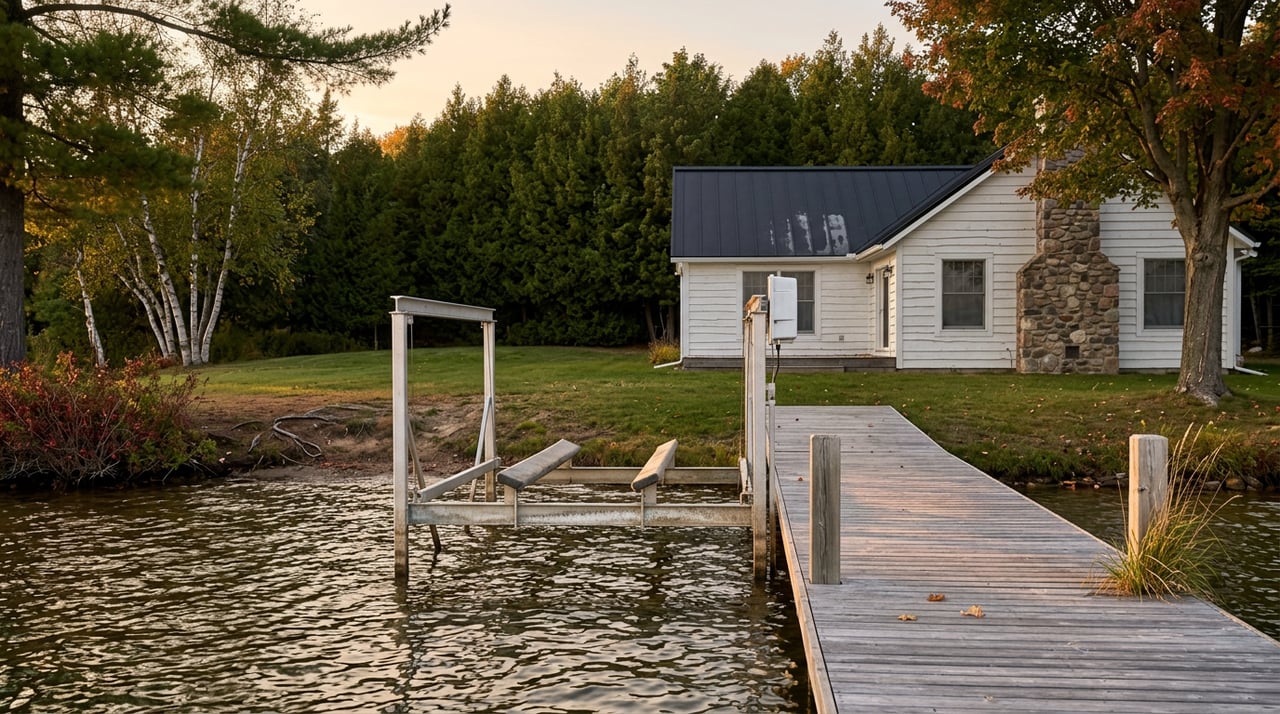
Lake Country Marina, the shop at 101 Banks Street that's serviced the Chetek Chain for decades, opens its online scheduling forms for dock and lift removal on September 1st every year. This year, the marina has a different arrangement than in past seasons: all dock and lift removals on the chain are being handled by a contractor called Cabin Fever, with Lake Country Marina taking the requests and coordinating the crew. Boat winterization and storage go through the same online system.
That single date matters more than most people realize until they've tried to book late. The lakes don't freeze on a schedule anyone can predict months in advance, but the list of names ahead of yours in the queue does grow on a schedule you can see coming. A homeowner who waits until the maples turn is not competing with the ice. They're competing with every other dock on the chain that got their name on the list in the first week of September.
Why the Early Date Beats the Obvious One
It would be easy to assume the safe move is to wait until October, closer to when the water actually gets cold enough to matter. The problem with that plan shows up in how unpredictable freeze timing has been in nearby parts of northwestern Wisconsin's lake country. One recent ice season in the region started forming in November, months earlier than the leisurely mental calendar most seasonal owners carry around. A dock crew working through a waiting list that fills in September has a much better shot at reaching every property before that kind of early freeze than one working through a list that only started forming in mid-October.
The forms don't open on September 1st because the ice has arrived. They open because the waiting list fills faster than the freeze does.
Barron County's fall color window adds its own pressure on the calendar too. Peak color across the county's lakes typically lands in early to mid October, which is exactly the stretch when most owners want their boat still in the water for one more weekend, not up on a trailer. That collision between wanting a few more weeks on the chain and needing to book removal service before the list closes is the actual tension September 1st is designed to solve.
The Chain Isn't One Lake, and That Changes the Job
Anyone who's owned a dock on more than one of the six lakes in the Chetek Chain knows the pull itself doesn't feel the same everywhere. A 2023 sediment study commissioned by the Chetek Lakes Protection Association, funded through a Wisconsin DNR Surface Water Grant and carried out with help from the Barron County Conservation District, measured exactly why.
Researchers sampled 31 locations across the chain and found sediment depths ranging from bare lake bottom up to 4.3 feet in the softest spots, with a total estimated volume across the whole chain of just over 10.1 million cubic yards. That volume isn't spread evenly.
| Lake | Approximate size | What the 2023 sediment study found |
|---|---|---|
| Lake Chetek | 683 acres | Least sediment in the chain, about 462,700 cubic yards, and the highest phosphorus reading of any lake sampled |
| Moose Ear | about 34 acres | Smallest lake in the chain, shallow and warm |
| Ojaski (locally known as Mud Lake) | about 567 acres | Mid-range sediment, spawning water for northern pike and walleye |
| Pokegama | about 494 acres | Mid-range sediment, one of the chain's more popular fishing lakes |
| Prairie | 1,545 acres | Largest lake in the chain and by far the heaviest sediment load, about 5.4 million cubic yards |
Tenmile Lake, the sixth in the chain, didn't carry the largest sediment volume but did register the highest total nitrogen concentration of any lake sampled.
Prairie Lake carrying nearly twelve times the sediment volume of Lake Chetek isn't just a water quality footnote. A lake bottom built up with several feet of soft material behaves differently under a dock than a harder, cleaner bottom does. Anyone who has fought a post out of a mucky bay compared to a firm one already knows this without needing the cubic-yard figure. What the study does is confirm the difference isn't in your head. It's measured, and it's specific to which of the six lakes your property sits on.
What This Means If You're Pulling a Dock This Year
For anyone with a dock, lift, or boat currently in the water on the Chetek Chain, the practical version of all this comes down to a short list:
- Get on Lake Country Marina's online scheduling form as soon as it opens September 1st. The list fills in order, not by how cold it feels outside.
- If your property sits on Prairie Lake or another softer-bottomed bay, expect the physical pull to take longer than it would on a firmer stretch of Lake Chetek. Book with that in mind rather than assuming every removal takes the same afternoon.
- Winterize boats and motors through the same system while you're scheduling the dock, since both run through the same forms this year.
- Before storing gear for winter, clean and dry it. Preventing invasive species from spreading between bays is one of the stated goals of the Chetek Lakes Protection Association, the nonprofit with roughly 460 members that works to protect the chain, and gear stored wet or muddy is exactly how that spread happens.
None of this is complicated. It's a matter of acting on the calendar the marina actually runs on, rather than the one the weather app suggests.
The Season Doesn't End When It Gets Cold
The Chetek Chain's fall turn isn't marked by a single frost or a specific week on the calendar. It's marked by a slow, visible thinning of docks along the shoreline, lake by lake, as names get worked through Lake Country Marina's list from the first week of September onward. By the time most people notice the water's turned cold, the owners who understand how this actually works have already been off the list for weeks.
That's the version of "living here" that never shows up in a fishing report or a festival calendar. It's the quiet, practical rhythm of a chain of six different lakes, each with its own bottom and its own timeline, coordinated around a date that has nothing to do with the thermometer.
If you're weighing what it actually takes to own and maintain a property on the Chetek Chain, from the seasonal upkeep to how different stretches of shoreline behave depending on which of the six lakes you're on, Hantke Homes works with buyers and owners across Barron County waterfront and the wider Rusk County area every year. Schedule your free consultation with Shannon to talk through what a specific stretch of shoreline actually asks of an owner before you commit to it.